Fun Bio:
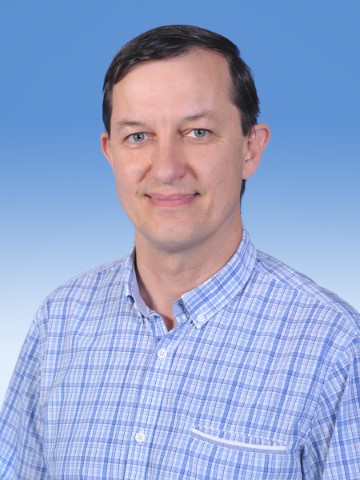
Deniz has been "physicist on call" at ExxonMobil's fundamental science laboratories since 1997. His research interests span a very broad range, with the proviso that Planck's constant is ZERO and the speed of light is INFINITY. At ExxonMobil, he has done fundamental research on rheology of granular flows, petroleum formation and phase behavior, diagenesis of carbonate and siliciclastic rocks, novel drilling technologies, and novel geophysical methods. His more applied interests include abrasion-resistant friction reducing coatings, flow batteries, geothermal energy, and electrical heating of industrial processes. He has twice received the Thomas Alva Edison Patent Award for his commercialized inventions. As of 2025, he has about 50 peer-reviewed publications and about 20 patents, over 6000 citations and a Google Scholar h-index of 38. He has published a mini-lecture series on immeasuracy on Substack, with NotebookLM generated explainer videos on his YouTube channel.
Before joining Exxon (before the Mobil merger), he was a postdoc at Harvard University. He received his Ph.D. in Theoretical Condensed Matter Physics from MIT in 1995. He has the dubious distinction of not having had to deal with any upperclassmen during both his undergraduate studies in Bilkent University, and his high school education in Izmir Fen Lisesi.
Now for the serious stuff:
Professional Summary
Intellectually curious and creative scientist with a deep knowledge of classical theoretical physics and nearly three decades of experience in inventing and advancing energy technologies at ExxonMobil’s premier research organization. Results oriented technical leader of cross-functional teams and pioneering physics-based solutions that drive innovation and reduce cost. Two-time winner of the Thomas Alva Edison Patent Award. Experienced and skillful at evaluating emerging technologies such as next generation geothermal. Critical thinker and out-of-the-box problem solver with a practical focus on what works rather than what is new.
Employment History
Research Physicist, Aug 1997 – Present
ExxonMobil Technology and Engineering Company, Annandale, NJ
Frequently sought-after subject matter expert in all things physics, contributing valuable insights to solve multifaceted industry challenges in an interdisciplinary R&D team setting. Worked closely with experimental and computational colleagues on a broad range of projects, bringing expertise in exploration geophysics, rock physics and mechanics, redox flow batteries, induction heating, low friction coatings, drilling mechanics to name a few.
A collaborator and inventor of 15+ issued patents and author of impactful publications in peer-reviewed journals, with nearly 6000 citations and an h-index of 38. See publications in Deniz Ertas - Google Scholar Profile
Spearheaded initiatives in geothermal energy, applying physics principles to address techno-economic challenges and to shape ExxonMobil's strategy.
Postdoctoral Fellow, Aug 1995 – Aug 1997
Harvard University, Department of Physics, Cambridge, MA
Invented novel microlithographic DNA sorter
Elucidated behavior of fractures in heterogeneous materials
Skills
Classical theoretical physics, flow in granular and porous media, drilling mechanics, rock physics, geothermal energy, hydrocarbon exploration, patent development, innovation leadership
Education
Ph.D. in Physics, Sep 1990 – Jun 1995
Massachusetts Institute of Technology, Cambridge, MA
B.S. in Electrical and Electronics Engineering, Sep 1986 – Jun 1990
Bilkent University, Ankara, Turkey
Honors
International Physics Olympiad, London 1986, Bronze Medal
Turkish National University Entrance Exam, 1986, Ranked #1 nationally in all categories
Languages
English (Proficient), Turkish (Native), German (Conversational)
Past Project Highlights
Rheology of Dense Granular Flows: Made key contributions to the understanding of dense inertial flows down an incline. Developed the algorithm and original C code that was later ported to FORTRAN and parallelized to become the LAMMPS GRANULAR package. Co-authored a Physical Review E milestone paper which has about 1000 citations to date.
Chemically Assisted Hydrothermal Drilling: Co-invented a new hole-opening technology based on caustic dissolution of rock under hydrothermal conditions. This involved several innovations, such as a novel two-phase spray impingement jet design that not only overcame but also exploited reaction and mass transport kinetics limitations to achieve in-gauge hole at commercially relevant rates of penetration. US Patent 6742603
Drilling Vibrations: Developed a set of models and workflows to help measure, diagnose and remedy torsional and axial drilling vibrations. Invented a reliable real-time stick-slip surveillance method using only surface measurement, which was commercialized through Pason as part of the ExxonMobil Drilling Advisory System™. US Patent 8589136 received the R&D Council of NJ 2015 Edison Patent Award.
Friction Reducing Coatings: Led a multidisciplinary team to design, develop and test novel abrasion-resistant friction reducing coatings in collaboration with world-leading coating companies. One of the coatings was commercialized through Weatherford as Racer severe-service sucker-rod couplings. US Patent 9617654 received the R&D Council of NJ 2018 Edison Patent Award.
Petroleum Expulsion And Primary Migration: Developed and validated a theoretical framework that describes the expulsion of hydrocarbons from kerogen as an equilibrium-driven phase separation of a multi-component fluid, driven by differences in solubility. This phenomenon was later understood to also be responsible for the morphology of organic nanopores in shales.
Transparent Earth: Led an ambitious physics-based effort to find new ways of detecting subsurface hydrocarbons. The team successfully identified and quantified the two primary mechanisms that give earth formations complex conductivity at low frequencies, a phenomenon known as induced polarization. The team also developed a novel magneto-seismic exploration method (US Patent 10101495), for which it was awarded the Best Poster Paper at the 2018 Society of Exploration Geophysicists (SEG) Annual Meeting.
Gabi Scientific Consulting
Expert scientific and engineering consulting services provided.
Support
© 2025. All rights reserved.